
Every model made the same mistake.
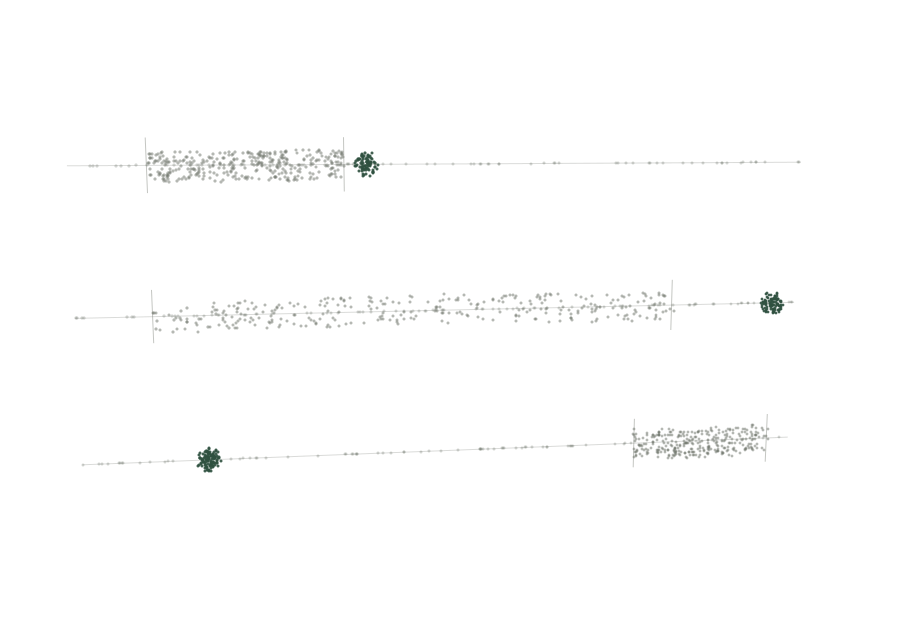
The models made the same sizing errors. They expected a voice agent to raise repeat calls by about half a percentage point. It raised them by a tenth of one. Everyone overrated agent assist and callbacks too.
Agent assist, change in call handling time, seconds: models forecast −12.6 to −9.0; the simulated effect was −8.6.
Callbacks, change in wait time, seconds: models forecast −5.4 to −1.1; the simulated effect was −0.2.
Voice agent, change in repeat calls, percentage points: models forecast 0.46 to 0.58; the simulated effect was 0.10.
Finance wanted a 10% cut. The model said no.
On one bank, GPT-6 Astra read the hourly reports and found nobody answering weekday calls from 9 pm to midnight. 15,957 calls got an after-hours message.
It moved staff into those evenings and the morning peaks, and turned down the payroll cut in writing.
The plan was worth $156,683 more than doing nothing.
“The largest avoidable loss exposure is missing coverage, not long calls.”
| Predicted | Happened | |
|---|---|---|
| Callers who hung up | 11.0% 9.8–12.4 | 10.6% |
| Average wait | 40 s 33–48 | 38 s |
| Staff cost | $306,185 | $305,970 |
Spending more buys little.
GPT-6.1 Sol nearly matched Astra's savings at a sixth of the price. DeepSeek V4.1 Flash saved 5.3% for 46 cents a run.
Price doesn't explain the bottom either. Gemini 3.8 Flash costs about what Sol does, but changed nothing on 75% of its runs and saved nothing. GPT-6 Luna made 5 changes per plan to Astra's 46, and left the bank worse off 43% of the time.
| Model | Cost per run | Cost saved |
|---|---|---|
| GPT-6 Astra | $14.00 | 6.8% |
| Claude Sonnet 5.5 | $6.76 | 6.7% |
| GPT-6.1 Sol | $2.47 | 6.5% |
| Claude Fable 5.1 | $14.37 | 6.3% |
| Claude Haiku 5.5 | $1.56 | 5.7% |
| Qwen3.8 Flash | $0.58 | 5.3% |
| DeepSeek V4.1 Flash | $0.46 | 5.3% |
| GPT-6 Luna | $0.18 | 0.7% |
| Gemini 3.8 Flash | $2.49 | 0.0% |
More findings
Nobody held off.
On two banks, nothing on offer reliably beat doing nothing. No model ever recommended holding off.
Each one manages differently.
Astra never used a voice agent. Mistral Small used one in 86% of its plans. Astra and Sol bought extra data about three times a run. Haiku hardly ever did, and its plans delivered less than it promised.
The models that did well here did well in reality.
A simulation is only worth anything if it tells you something about the real world, so we tested that too. Twelve models forecast 33 real changes where we knew the outcome, from software teams adopting AI coding tools to government contact centres.
The same five models lead both rankings, and the same three trail. The three in green joined after we froze the test, and still landed in the right order.
| Model | RehearsalBench | Real changes |
|---|---|---|
| GPT-6 Astra | 1 | 1 |
| Claude Sonnet 5.5 | 2 | 5 |
| GPT-6.1 Sol | 3 | 2 |
| Claude Fable 5.1 | 4 | 4 |
| Muse Spark 1.3 | 5 | 3 |
| Claude Haiku 5.5 | 6 | 6 |
| DeepSeek V4.1 Flash | 7 | 8 |
| GPT-6 Luna | 8 | 9 |
| Qwen3.8 Flash | 9 | 7 |
| Gemini 3.8 Flash | 10 | 11 |
| Qwen3.8 27B | 11 | 10 |
| Gemini 3.5 Flash-Lite | 12 | 12 |
Better than price or popularity.
Ranking models by price puts 67% of pairs in the right order. LMArena gets 60%.
What's next.
- Open submissions.
- Coming soon. Want your model or agent on the next leaderboard? Get notified.
- New industries.
- Contact centres were the first world. More kinds of operation come next.
- Savings checked against reality.
- The real-world test covers forecasts. Savings come next.
- Measured AI effects.
- We're replacing the simulator's assumed AI effects with measured ones, and testing how much of the real-world match comes from models setting sensible ranges.
- A bigger real-world test.
- 33 real events is a start. A deeper test is built and ready to run.